

What if the first step in a missing-will dispute isn’t deciding who’s right, but establishing what the family can actually verify? When relatives disagree about whether a will exists or what it said, uncertainty can quickly feel like suspicion. In family disputes over lost wills, incomplete information and pressure to act may make it harder to protect the deceased person’s wishes and preserve important relationships.
It’s understandable to want clear answers quickly. Careful fact-finding and respectful communication can help prevent assumptions from becoming accusations. This article explains how to check likely document sources, keep relevant records, and clarify who is handling each task. It also explains when it may be appropriate to consult a qualified probate or estate attorney in the relevant jurisdiction. The rules and options depend on local law and the circumstances. The aim is not to settle a disagreement by guesswork, but to reduce confusion and give your family a more orderly path forward.
Key Takeaways
- Family disputes over lost wills can stem from uncertainty about whether a will exists, where it is, or what it says, not just disagreements about inheritance.
- Keep a neutral record of which likely document sources have been checked and when, so confirmed facts stay distinct from assumptions.
- Agree on one contact person to coordinate family updates and help prevent repeated or conflicting requests.
- Before taking action, consider whether local probate rules or the circumstances call for advice from a qualified estate attorney.
- A will-location record can help relatives know where to look, but it does not draft, store, or change the will, or determine who inherits.
Why a Missing Will Can Turn Family Uncertainty Into Conflict
A lost-will dispute arises when relatives are unsure whether a will exists, where it was kept, or what it says. Those questions can feel urgent after a death, especially when family members are grieving and facing practical decisions. Different expectations about who should inherit may add pressure before anyone has confirmed what documents exist.
Incomplete information leaves room for competing explanations. One relative may remember hearing that a will was updated; another may believe an older version was final. Record these accounts, but remember that conflicting memories do not establish a document’s contents. Suspicion may arise, particularly if someone had access to papers or property, but disagreement alone isn’t evidence of wrongdoing. Clarify what is known before drawing conclusions about anyone’s motives.
What makes a missing will especially difficult for relatives?
Potential beneficiaries and heirs may have different expectations based on past conversations, family circumstances, or assumptions about fairness. If there’s no confirmed will or clearly identified person coordinating next steps, relatives may also be unsure who has checked for documents, who can share information, or who is authorized to handle particular matters.
That uncertainty can make ordinary delays seem deliberate. A relative who hasn’t responded may simply lack information; someone who recalls a conversation may remember it differently from others. Keep these possibilities separate from verified facts. A memory or secondhand account can guide questions, but it shouldn’t be treated as proof of a will’s terms.
How is a lost-will disagreement different from an ordinary inheritance dispute?
An inheritance dispute usually concerns the outcome: who should receive particular assets, or whether the distribution is fair. A lost-will disagreement starts earlier, with questions about the document itself: whether it was made, whether it can be located, and what its provisions were. The two issues can overlap, but resolving one doesn’t automatically settle the other.
Probate procedures and inheritance outcomes depend on the applicable state law and the facts of the case. A general overview of probate and lost wills can provide background, but it can’t determine how a court will assess a particular document or other evidence. Don’t assume that a copy will be accepted or rejected without advice specific to the jurisdiction and circumstances.
Start with verification, not blame. Record what relatives know firsthand, what remains uncertain, and which questions need follow-up. That distinction can help keep family conversations focused while the document’s status is unclear.
What Families Should Establish Before Drawing Conclusions About a Lost Will
Before assigning responsibility or making decisions based on a suspected will, establish a shared record of what the family knows and what remains uncertain. A missing document can prompt urgent questions, but a structured review helps separate reliable information from recollection and rumor. This is a useful first step in reducing family disputes over lost wills.
Which facts should relatives confirm first?
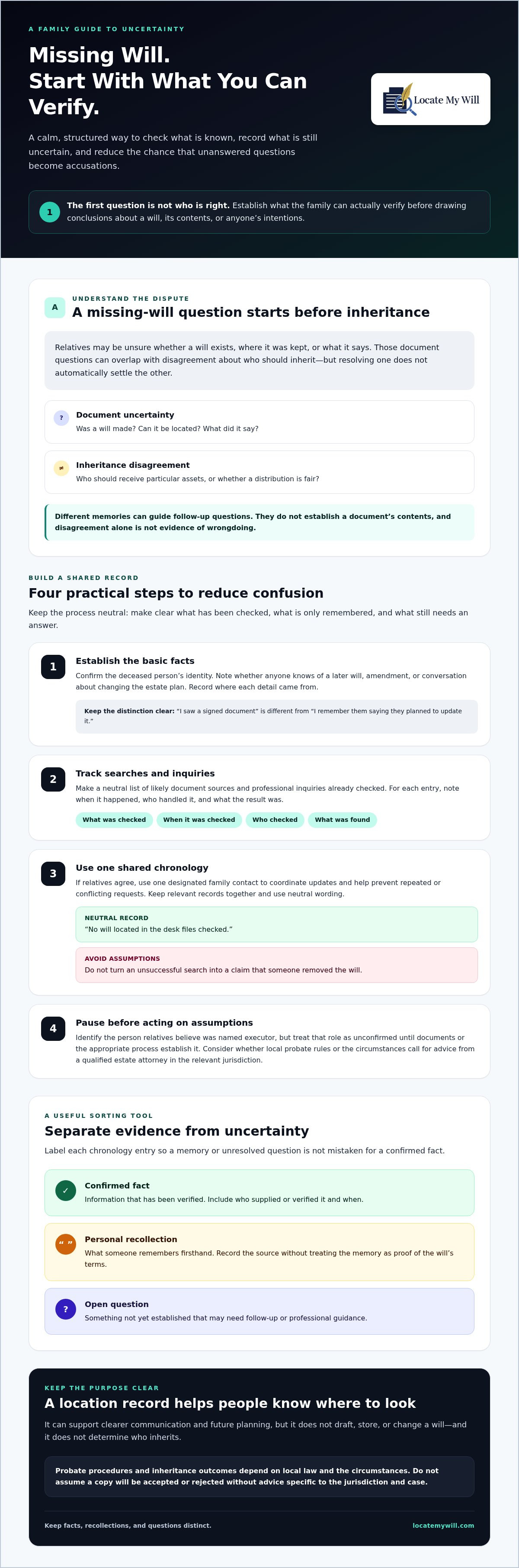
Begin with basic identification and document history. Confirm the deceased person’s identity, then note whether anyone knows of a later will, amendment, or conversation about changing the estate plan. Record the source of each detail. For example, distinguish “I saw a signed document” from “I remember them saying they planned to update it.”
Identify the person relatives believe was named executor, but treat that as unconfirmed until the relevant documents or appropriate process establish their role. Make a list of searches and professional inquiries already completed, including when they occurred, who handled them, and what the result was. For practical search steps, see How to Find a Deceased Person's Will: A Systematic Search Protocol.
How can families keep a clear, neutral record?
Use one shared chronology, maintained by a designated family contact if relatives agree. Label each entry as a confirmed fact, a personal recollection, or an open question. Include dates and the person who supplied or verified the information. Neutral wording matters: write “No will located in the desk files checked on May 4,” not “The will was removed.”
Keep original documents, copies, letters, emails, and relevant messages intact. Don’t write on originals, delete messages, or discard materials that may help clarify the document’s history. Limit the circulation of unverified claims; sharing an allegation as fact can deepen mistrust and make later conversations harder.
An unlocated will is not the same as a will confirmed not to exist. The first describes the current result of a search; the second is a conclusion that may require further evidence or professional guidance. A careful record should preserve that distinction rather than treating an incomplete search as a final answer.
For future planning, a will-location record can give authorized searchers a clear place to begin without storing or changing the will itself. If that approach may help your family, learn about recording a will’s location and managing authorized searchers. It’s a planning tool, not a substitute for legal advice or a resolution of inheritance questions.
Which Responses Reduce Conflict and Which Can Make It Worse?
In family disputes over lost wills, the way relatives communicate can either keep uncertainty manageable or turn it into a personal accusation. A calm, fact-focused conversation won’t resolve every disagreement, but it gives everyone a fairer chance to share information without making premature promises about inheritance.
How can relatives discuss a missing will without taking sides?
Ask specific, neutral questions: “Do you remember when the will was last discussed?” or “Has anyone contacted the attorney who may have prepared it?” Invite relevant relatives to share what they know through one agreed channel, such as a shared email thread. Acknowledge different recollections without treating any one account as proof. For example: “I remember that conversation differently, so let’s record both accounts and check what can be verified.”
Set a clear boundary around decisions. Until the document’s status and applicable legal guidance are clearer, relatives should avoid promising that a person will inherit a particular asset or asking others to agree to an informal distribution. Good intentions don’t establish what the deceased wanted or what the law requires.
One neutral contact person can coordinate updates and direct questions to the right person. This can reduce duplicate requests and conflicting messages. The contact’s role is to share information, not decide who is right or act as a substitute for an authorized representative.
| Constructive response | Response that may worsen mistrust |
|---|---|
| Ask when a document was last seen and who has already been contacted. | Accuse a relative of hiding or destroying the will without evidence. |
| Record differing memories as recollections that need checking. | Present one person’s memory as the confirmed contents of the will. |
| Use one agreed contact person and communication channel. | Send repeated demands or conflicting instructions to relatives. |
| Wait for facts and appropriate advice before discussing distribution. | Pressure family members to accept an informal inheritance promise. |
When should a family pause direct discussions?
Pause a conversation if it involves threats, intimidation, or repeated accusations. Take time to preserve relevant communications and consider whether future updates should go through the agreed contact person. If relatives dispute who has authority to act or whether a document is authentic, seek guidance from a qualified probate or estate attorney in the relevant jurisdiction.
Ordinary disagreement, different memories, or a delayed response don’t by themselves establish fraud, concealment, or legal misconduct. Keep the focus on what can be verified. For future planning, a service that records a will’s location and manages authorized searchers may help relatives know where to begin, without storing the will or deciding who inherits.
Practical Steps to Protect Relationships While the Will's Status Is Unclear
A steady process can help relatives make progress without turning uncertainty into blame. These steps keep the focus on preserving information, coordinating communication, and getting qualified guidance when the situation calls for it.
- Pause assumptions. Don’t treat a missing document, a delay, or a relative’s recollection as proof of anyone’s motives. Keep conclusions separate from confirmed facts.
- Document what’s known. Maintain a dated record of communications, reported document locations, and completed search steps. Mark recollections and unanswered questions clearly.
- Coordinate updates. If relatives agree, use one contact person and a consistent channel to share relevant information. Limit access to sensitive personal or financial details to those who need them.
- Seek advice when needed. If the document’s status, validity, or handling is disputed, consult a qualified probate or estate attorney familiar with the relevant jurisdiction.
This measured approach can ease family disputes over lost wills by giving relatives a reliable process, even when they don’t yet have a clear answer.
What should the family document and preserve?
Keep originals and copies intact, along with relevant letters, emails, and messages. Don’t write on, alter, or discard a disputed document. Before submitting it to anyone or taking steps that could affect it, ask a qualified professional what to do. A dated log should identify what was checked, when, by whom, and what was found, using neutral descriptions rather than conclusions.
Share records only with people who need the information to help resolve the issue. For an overview of possible effects on beneficiaries, read Consequences of a Lost Will for Beneficiaries: A Legal and Financial Overview.
When is legal guidance especially important?
Get individualized advice if relatives disagree about a document’s validity, what it means, or who has authority to act. Probate procedures and deadlines vary by state and may depend on the circumstances. Ask a qualified local attorney which rules apply and whether any time-sensitive requirements need attention. Don’t rely on a general deadline from another state or situation.
This article provides general information, not legal advice. If clearer will-location planning would help reduce uncertainty for your family in the future, record where a will is kept and manage authorized searchers. The service records location information, not the will itself, and doesn’t replace legal advice.
Preventing Future Family Disputes Starts With Clear Will-Location Planning
A clear record of where a will is kept can give relatives a practical starting point when they need to locate it. It doesn’t change the will, establish who inherits, or guarantee that disagreements won’t arise. As part of planning for family disputes over lost wills, making the document’s location easier to identify can reduce uncertainty at a difficult time.
What information should a location plan communicate?
Record where the signed original is kept and who is responsible for holding it. The will remains with its chosen custodian; a location record is not the document itself. If the original moves, update the record promptly. Do the same if the will is replaced or amended, so the location details don’t point relatives toward an outdated document.
Choose trusted people who understand their role and know how to access the relevant information. Make the instructions clear enough to act on, while limiting sensitive details to the people who need them. A location plan should help someone find the document, not invite them to interpret or change it.
How can a will-location registry support family preparedness?
Locate My Will is a subscription-based service for recording where a will is kept. It records location information, not the will itself, and doesn’t draft, host, or physically store legal documents. Account holders can designate up to three authorized searchers and up to three notification recipients. Searchers must be verified before they can access the recorded location information.
Activation dates control when searches can be performed and notifications sent. These controls help organize access according to the account holder’s plan; they don’t replace a will, legal advice, or the role of the document’s custodian. Before relying on the service, confirm current account, verification, notification, and subscription details.
Clear location planning can make it easier for relatives to know where to begin, while leaving the will and its legal effect unchanged. It doesn’t determine who inherits or resolve an existing dispute, but it can reduce one source of confusion.
If you’re considering a way to record where a will is kept and manage authorized searchers, explore Locate My Will’s location-recording service.
Take a Clear, Considerate Next Step
Family disputes over lost wills can grow when relatives mistake uncertainty for evidence or feel pressured to decide what should happen before the facts are clear. Keep a neutral record of what’s known, communicate through an agreed contact person, and avoid promises about inheritance while the document’s status remains unresolved.
If questions arise about a will’s validity, who has authority, or applicable deadlines, consult a qualified probate or estate attorney in the relevant jurisdiction. State procedures vary, and general information can’t replace advice tailored to your circumstances.
For future planning, a will-location record can help authorized searchers know where to look without storing or changing the will itself. Locate My Will requires searchers to be verified before they can access location information, and activation dates control when searches and notifications can occur. These are planning features, not a resolution to inheritance disputes.
Explore a secure way to record your will's location, and take one practical step toward clearer communication and greater peace of mind for your family.
Frequently Asked Questions
Can a missing will cause family disputes?
Yes, a missing will can create uncertainty that strains family relationships. Relatives may disagree about whether a will exists, where it was kept, or what it said, while grieving and managing practical responsibilities. Those tensions don’t prove anyone acted improperly. Keep recollections separate from verified information, and avoid treating an unanswered question as evidence of wrongdoing. Careful fact-gathering and calm communication can help prevent family disputes over lost wills from escalating.
What should a family do first when relatives disagree about a lost will?
Start by making a neutral record of what is known and what remains uncertain. Note who has checked which likely document sources, when they checked, and what they found. Record firsthand knowledge separately from memories or secondhand accounts. Preserve relevant documents and messages without altering or discarding them. If possible, coordinate updates through one agreed contact person so relatives receive consistent information rather than repeated or conflicting requests.
Can someone inherit if no one can find the will?
Possibly, but the outcome depends on the circumstances and applicable state law. If no will is found or established, state intestacy rules may determine how the estate is distributed. In some situations, relatives may seek guidance about whether a missing will can be proven using available evidence. Don’t assume that a copy or recollection will settle the matter. A qualified probate or estate attorney can explain the options in the relevant jurisdiction.
What happens if family members disagree about what the deceased wanted?
Different memories can help identify what questions to investigate, but they don’t establish the terms of a will. Record each account as a recollection, not a confirmed fact, and look for relevant documents or other reliable information. Avoid making informal promises about who should receive property while the facts are unclear. If the disagreement concerns a document’s meaning or validity, ask a qualified local attorney for advice specific to the situation.
Should relatives contact an attorney about a lost will?
Contact a qualified probate or estate attorney if relatives dispute a document’s validity, interpretation, or handling, or disagree about who has authority to act. An attorney familiar with the relevant jurisdiction can explain local procedures and whether any time-sensitive requirements apply. Probate rules and deadlines vary by state, so don’t rely on a general timeline or advice meant for another situation. General information cannot replace individualized legal guidance.
Does a will-location registry store the will itself?
No. Locate My Will records information about where a will is kept; it doesn’t store the will, draft it, or provide physical document storage. The signed document remains with its chosen custodian. The service allows account holders to designate up to three authorized searchers, who must be verified before accessing location information. Activation dates control when searches can be performed and notifications can be sent.
How can families prevent conflict over a will's location in the future?
Keep a current record of where the signed will is held, and update it if the document moves or is replaced. Tell trusted people what their role is and how they can access relevant location information. A will-location service such as Locate My Will can record the location and manage authorized searchers and activation dates. This planning can reduce uncertainty, but it doesn’t change the will, determine who inherits, or replace legal advice.


