

Access matters more than a perfectly labeled filing cabinet. For financial caregiving, start with a copy of your parent’s financial power of attorney, along with clear records of bank accounts, property deeds, insurance policies, income sources, and financial obligations. Organizing legal documents for aging parents means tracking which records exist, where originals are kept, and who has authority to use them.
Gathering paperwork is a useful first step, but knowing where to find it and having the proper authority to act matter just as much. This guide covers legal, financial, medical, and personal records to collect, how to store them securely and accessibly, and how to create a document inventory. It also offers a considerate way to raise the subject with your parents while respecting their privacy and keeping their wishes at the center.
Key Takeaways
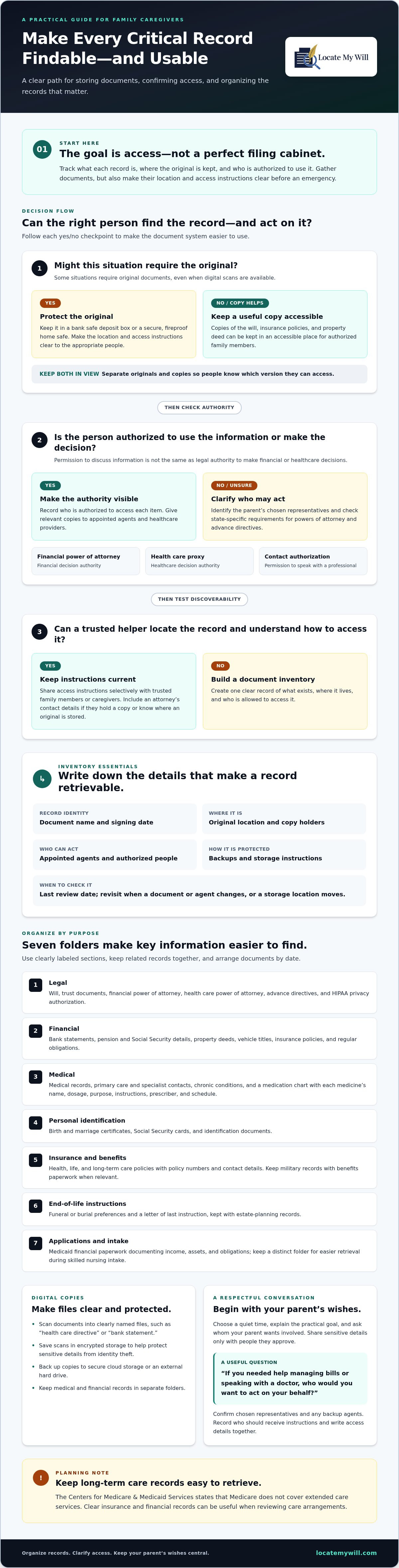
- Create a simple inventory that notes what each record is, where the original is kept, and who is authorized to access it.
- Group financial, legal, medical, and personal paperwork so essential information is easier to find when needed.
- Start the conversation with your parents by asking about their wishes and who they trust to receive instructions.
- Review state-specific requirements for powers of attorney, advance directives, and wills, and record where the will can be located.
Where Should Important Documents Be Stored For Easy Access?
Choose a secure place for original documents and make access instructions clear before an emergency. A bank safe deposit box may hold important papers, while copies at home can help authorized family members locate information. Some situations require original documents, even when digital scans are available.
A fireproof home safe can keep vital records together and accessible. For digital access, scan documents into clearly named files and save them in encrypted storage. You can also back up copies to an external hard drive or cloud storage. Encryption helps protect sensitive details, such as Social Security numbers, from identity theft.
- Separate originals and copies. Store originals in a bank safe deposit box or secure home safe, and keep copies of the will, insurance policies, and property deed in an accessible place.
- Build a digital filing system. Name each scan by document type, such as “health care directive” or “bank statement,” then back up files to secure cloud storage or an external hard drive.
- Record where each item lives. Make an inventory with the document name, signing date, original location, copy holders, appointed agents, backups, and last review date.
- Share access instructions selectively. Tell trusted family members or caregivers where the records are kept and how to access them. Give relevant copies to appointed agents and healthcare providers.
Include the attorney’s contact details in the inventory if they hold a copy or know where an original is stored. Keep medical and financial records in separate folders, so a caregiver can find the right file quickly. If planning for long-term care, keep insurance and financial records easy to retrieve. The Centers for Medicare & Medicaid Services states that Medicare does not cover extended care services, making clear records useful when reviewing care arrangements. Review the inventory when a document changes, an agent changes, or a storage location moves.
Sorting and categorizing legal, financial, medical, and personal records
Sort legal, financial, medical, and personal records into separate folders or binder sections. Label each clearly and arrange documents by date so an appointed caregiver can find current information quickly. A checklist can reveal gaps before a medical appointment, benefits application, or move to assisted care. When organizing legal documents for aging parents, decide which section each record belongs in.
- Legal: File the will, trust documents, financial power of attorney, health care power of attorney, advance directives, and any HIPAA privacy authorization together. These records show the parent’s instructions and who may act on them.
- Financial: Collect bank statements, pension and Social Security details, property deeds, vehicle titles, insurance policies, and records of regular obligations. This gives an authorized helper a clearer view of assets and bills.
- Medical: Keep medical records with primary care and specialist contacts, chronic condition details, and a medication chart. List each medicine’s name, dosage, purpose, instructions, prescriber, and schedule to support accurate treatment decisions.
- Personal identification: Gather birth certificates, marriage certificates, Social Security cards, and identification documents. These may be needed to establish identity or support applications and family records.
- Insurance and benefits: Sort health, life, and long-term care insurance policies separately, with policy numbers and contact details. Keep military records with benefits paperwork when relevant, since they may be required for VA benefit applications.
- End-of-life instructions: Include funeral or burial preferences and a letter of last instruction with estate-planning records. These personal details help relatives understand arrangements alongside formal documents.
- Applications and intake: Set aside Medicaid financial paperwork, including records that document income, assets, and obligations. A distinct folder can also make documents easier to locate during skilled nursing intake.
Review the checklist with your parent, marking each item as located, missing, or needing an update. Make sensitive records available only to people authorized to help, rather than sharing them broadly. This distinction is essential: permission to discuss information is not the same as legal authority to make financial or healthcare decisions.
Discussing document organization with aging parents
Start with your parent’s wishes, not a request to collect every record. Choose a quiet time and explain the practical aim: trusted family members should know whom to notify and where to find instructions in an emergency. Ask whom your parent wants involved, and respect their preference for keeping sensitive details private.
A specific question can make the discussion easier: “If you needed help managing bills or speaking with a doctor, who would you want to act on your behalf?” Clarify that permission to speak with a professional differs from authority to make decisions. A health care proxy, financial power of attorney, and contact authorization each serve a distinct purpose.
- Ask who should receive instructions. Record the family member your parent plans to notify, so important arrangements reach the intended person.
- Discuss the chosen representatives. Confirm whom your parent trusts for financial and medical decisions, and whether they have named backup agents.
- Invite the right people to a family conversation. Include only the relatives your parent approves, which helps limit unnecessary sharing and avoid surprises.
- Write down access instructions together. Note where records are kept and how authorized people can retrieve them, so urgent searches don’t depend on memory.
- Agree on a review routine. The National Institute on Aging advises reviewing plans once each year and after major life events.
Let your parent decide what to share and with whom. If siblings disagree, return to your parent’s stated wishes instead of turning the discussion into a vote. A brief written record of agreed actions can help everyone stay clear about next steps.
Arrange regular reviews of legal documents with an attorney, especially when family circumstances or intentions change. After each review, update the instructions and inform the designated family member. The goal is more than a completed folder: everyone should understand who may act, what your parent wants, and where to find the relevant arrangements.
How do state laws affect powers of attorney, advance directives, and wills?
State law affects how powers of attorney, advance directives, and wills are prepared and recognized. If your parent moves or their circumstances change, documents created for one state may need review. For each document, note the state where it was prepared, its signing date, and the attorney’s contact information. This gives the family a practical starting point for a state-specific review.
- Financial power of attorney: This document names someone to manage financial matters if the parent becomes incapacitated. A durable power of attorney is effective immediately upon signing; a springing durable power of attorney takes effect under specified conditions, such as a physician determining incapacity.
- Backup agent: Record any alternate agent named in the financial power of attorney. If the first choice cannot serve, the alternate may be able to step in under the document’s terms.
- Health care authority: A medical power of attorney names someone to make healthcare decisions if the parent becomes incapacitated. An advance directive records treatment preferences, so keep the appointed decision-maker’s authority distinct from the parent’s instructions.
- Will: A will directs how assets should pass to intended beneficiaries, but generally does not authorize someone to act for the parent during their lifetime. If a person dies without a will, their estate is distributed according to state law.
Many states provide advance directive forms at no cost, and people may complete them without a lawyer. Requirements nevertheless vary by state and document type. An attorney can review whether power-of-attorney documents meet applicable state requirements. If a parent has been determined mentally incompetent, ask an attorney about available legal steps. Taking over finances without an appointed agent may require legal guardianship or conservatorship.
Keep the signed will’s location in the family’s records, separate from the will itself. To make that location easier for authorized searchers to find, record a will’s location.
Locate My Will: Will Owner Registration Subscription
Locate My Will helps will owners record where their will is kept, so authorized searchers know where to look once a search is activated. The Will Owner Registration Subscription records the will’s location; it does not store the will itself.
Use Authorized Searcher Management to designate up to three authorized searchers and three notification recipients. Search Activation Date Control lets users set when searches can be performed and notifications sent. These tools can complement a family document inventory by keeping the will’s location and search arrangements recorded separately from the document.
If your parent has a will and wants to record where it is kept, Locate My Will provides a way to do that. Visit locatemywill.com to learn more.
Make the Next Step Clear
A practical next step in organizing legal documents for aging parents is to agree on who will maintain the family’s shared instructions. Choose one person to record changes after a move, a new representative, or a revised estate-planning document. This handoff keeps arrangements aligned with your parent’s current wishes without making one relative responsible for every decision.
Keep the conversation ongoing. Your parent may want to change who receives information or how family members take part. Treat those preferences as part of the plan, not an afterthought. A clear record of everyone’s agreed roles can help relatives respond consistently as circumstances change.
If recording where a will is held is the next step, contact Locate My Will to learn about its will-location service. One deliberate conversation can make the family’s next action easier to understand and follow. Your parent’s wishes remain the guide.
Frequently Asked Questions
What Financial Documents Should Caregivers Have Access To?
Caregivers helping with finances need access to the financial power of attorney and records relevant to their assigned tasks. For example, someone paying household bills may need information about recurring expenses and income. Match access to the authority your parent granted: being a relative or caregiver does not, by itself, give someone permission to make financial decisions.
What Legal Documents Should Every Aging Adult Have?
Consider gathering a will, financial power of attorney, health care power of attorney, and advance directive. Each has a different purpose: a will directs asset distribution after death, while the other documents address decisions during life. A trust may also fit your parent’s goals and circumstances. The appropriate documents depend on their plans and applicable state requirements.
What Personal Identification Documents Should Be Gathered?
Gather a birth certificate, Social Security card, current identification, and marriage certificate, if applicable. These records can help establish identity or family relationships for administrative tasks, such as handling an insurance matter or preparing an application. Keep a separate note of where originals are held, and limit access to sensitive numbers to people who need them for an authorized task.
Why Is It Important To Organize Important Documents Before They’re Needed?
Organizing records in advance makes it easier to find instructions during a stressful event. If your parent is admitted to a hospital, relatives can identify the health care decision-maker and locate the advance directive. If financial help becomes necessary, knowing whether a power of attorney exists clarifies what to do next. Preparation also gives parents time to explain their wishes before urgent decisions arise.
Checklist for Aging Parents: What Should You Include?
Build a checklist around four categories: legal instructions, financial information, medical details, and personal records. Include the will and powers of attorney; account, income, property, and insurance records; clinician contacts and medication details; and identification documents. Add end-of-life preferences, such as funeral arrangements, if your parent wants them recorded. Mark each item’s status and note who is authorized to use it.
How Can Organized Records Make Transitions To Skilled Nursing Care Smoother?
Organized records can help families find paperwork requested during skilled nursing intake and avoid delays caused by scattered files. For example, grouping identification, insurance details, medication information, and relevant health care instructions makes it easier to assemble what the intake process requires. A designated family contact can use the inventory to retrieve appropriate records and communicate your parent’s preferences.


