
A hard-to-find will can leave the people responsible for carrying out your wishes without a clear starting point. Effective will location management means recording where the signed document is kept and updating that information whenever it moves. The record should point to the will, not replace it.
Keeping a will secure matters, but trusted people also need a reliable way to locate it when the time comes. A clear, current location record helps prevent confusion if the document is moved. Managing who can search and when notifications are sent also supports privacy and orderly access.
This guide explains what location details to record, when to update them, and how to manage authorized searchers and notification timing. Consistent records can reduce the risk of misplacement, support security, and help representatives find the right document when needed. You’ll learn how registration works and why ongoing updates keep the information useful.
Key Takeaways
- Record a specific storage location for your will, then revise the details whenever you move the document.
- Separate the will itself from its location record so authorized people can find it without treating the record as the legal document.
- Consider who should be able to search: registration can include up to three authorized searchers and three notification recipients.
- Explore how search activation date controls can align access and notifications with your wishes.
Location registration and updates
For families, will location management works best when the record shows where to find the will without storing the document itself. Clear details and timely updates help representatives follow the right route.
Registering Locations
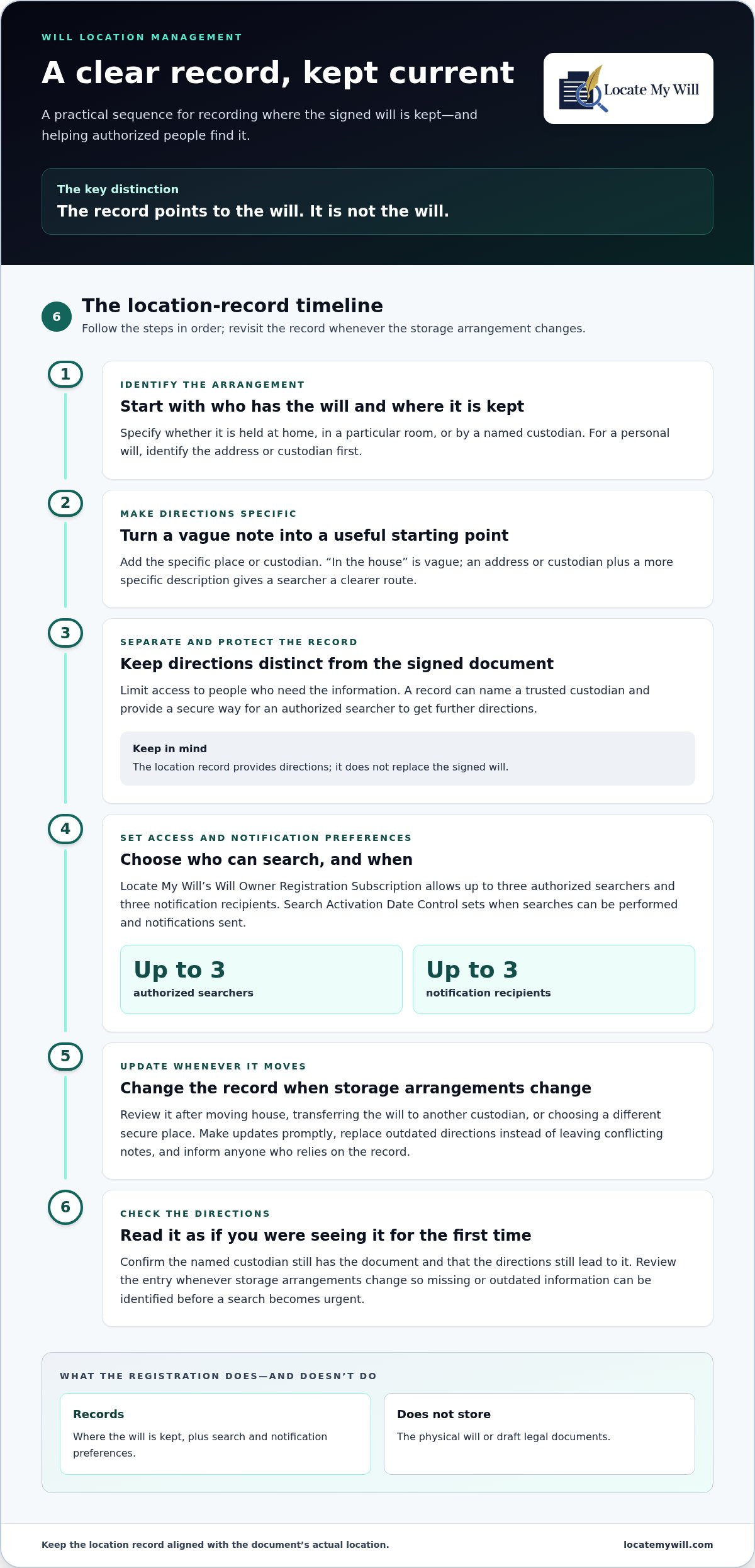
Registering a location means recording the will’s current storage place in a clear, consistent format. Specify whether it is held at home, in a particular room, or by a named custodian. This turns a vague note such as “in the house” into a useful starting point for someone searching.
Organizations may organize location records by hierarchy, such as country, city, office, department, and room. For a personal will, a simpler structure is usually enough: identify the address or custodian, then describe the specific place. Keep the location record separate from the signed document so it is clear that the record provides directions, not another will.
Updating Location Information
Update the record whenever the will moves or its storage arrangements change. Review the entry after moving house, transferring the document to another custodian, or choosing a different secure place. An outdated location can misdirect a search, even if the new arrangement is sensible.
Make updates promptly, then read the revised entry as if you were seeing it for the first time. Replace outdated directions instead of leaving conflicting notes, and inform anyone who relies on the record. In organizational asset management, barcode scanners, RFID tags, and mobile apps can automate updates when assets move. For a will, the priority is keeping the record aligned with its actual location.
Consistent will location management also matters when records cover multiple organizational sites. The U.S. Government Accountability Office notes that projecting savings across locations can be difficult because savings may vary by location. For a personal record, make each update specific enough to guide a searcher to the right document.
Security, theft prevention, and compliance
Managing multiple locations can lead to inconsistent records, communication gaps, and uncertainty about who is responsible for updates. These problems can reduce accuracy and complicate coordination.
For a will, protect the location record by limiting access to people who need it. Keep directions separate from sensitive details that could reveal the exact storage place to unauthorized readers. For example, the record can name a trusted custodian and provide a secure way for an authorized searcher to get further directions.
Accuracy also depends on review. Organizations can audit asset locations periodically; for a personal will record, review the entry whenever storage arrangements change. Confirm that the named custodian still has the document and that the directions still lead to it. This can reveal missing or outdated information before a search becomes urgent.
ISO 27001 is an example of a framework relevant to maintaining accurate organizational asset records. Organizations may also need accurate records for audit and reporting requirements under GDPR or SOX. These frameworks concern organizational compliance, not a blanket legal requirement for an individual to register a will’s location.
Organizations can use GPS to track mobile assets such as company vehicles and field equipment, while IoT sensors can support automated monitoring in warehouses. These tools can improve visibility for remote assets, but a will’s location record relies on accurate updates. When records cover multiple locations, assign responsibility for changes and make sure updates reach the right people.
A secure record helps authorized people find the will without making the document itself broadly available. If you want a structured way to record where your will is kept, explore will location registration.
Locate My Will: Will Owner Registration Subscription
Locate My Will lets you record where your will is kept through its Will Owner Registration Subscription. Use it when you want a structured location record and a way to manage who can search for the will.
You can designate up to three authorized searchers and three notification recipients. Search Activation Date Control lets you set when searches can be performed and notifications sent. The service records the will’s location; it does not store the physical document or draft legal documents.
To keep your location details and search permissions organized in one place, sign up with Locate My Will.
Make Your Next Step a Deliberate One
Planning is most useful when the people who may need to act can understand it. Consider whether someone you trust could follow your arrangements without relying on your memory or assumptions. This can reveal where your plans need clearer directions.
Treat will location management as part of your wider preparation, not a task to set aside once completed. A change in circumstances is a good prompt to review whether your records and choices still reflect your intentions. Keeping this responsibility visible helps future representatives start with a clearer understanding.
If you’re ready to put a dependable process in place, contact Locate My Will to explore how its registration and search management options fit your plans. Take the next step at a pace that feels considered, and give your wishes a clearer path forward.


