

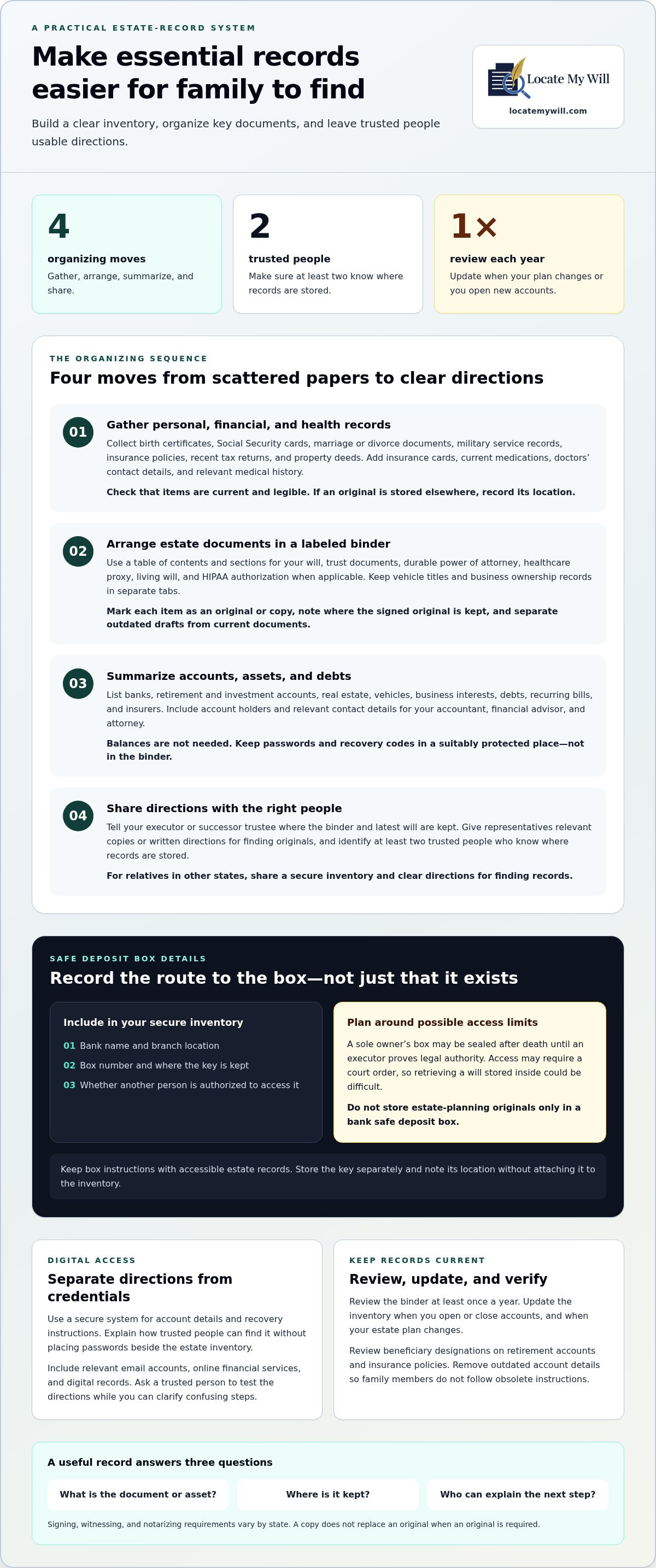
A complete estate plan helps your family only if they can find it. To organize estate documents for your family, gather key records in a central binder, make an inventory of where originals and copies are kept, and tell trusted people how to access them. Review the binder at least once a year and update it when your estate plan changes or you open new accounts.
Keeping everything together can make a difficult moment easier to manage, but a binder is useful only when its contents and location are clear. Include your will, relevant financial and healthcare documents, account information, and important contacts. Note safe deposit box details and access instructions, too.
This guide explains how to arrange records, store originals and backup copies, review beneficiary designations, and build a binder your family can use. You’ll also learn what to record about physical and digital access, who should know where the information is, and how to keep the file current as circumstances change.
Key Takeaways
- Build a clear inventory of essential estate, financial, and healthcare records, then note where each original is kept.
- Record safe deposit box details and access instructions so loved ones know where to look and what may limit access.
- Keep signed originals secure, maintain useful backup copies, and make sure trusted people know how to find both.
- Review beneficiary designations on retirement accounts and insurance policies as part of keeping your estate records current.
- Use a table of contents and labeled sections to make a central binder easier to navigate, and review it at least once a year.
How should I organize my estate planning documents so my family can find them?
Review your estate documents once a year and update them when your estate plan changes or you open new accounts. If relatives live in different states, give them a secure inventory and clear directions for finding records, while protecting sensitive details.
-
Gather Personal, Financial, and Health Records
Gather personal, financial, and health records before choosing binder sections. Include birth certificates, Social Security cards, marriage or divorce documents, military service records, insurance policies, recent tax returns, and property deeds. Add insurance cards, current medications, doctors’ contact information, and relevant medical history. Check that each item is current and legible. If an original belongs elsewhere, note where it is stored. A deed copy can help loved ones identify property.
-
Arrange Estate Documents in a Binder
Place estate planning documents in labeled sections, then add a table of contents describing each one. Include your will, trust documents, durable power of attorney, healthcare proxy, living will, and HIPAA authorization when applicable. Keep related records, such as vehicle titles and business ownership documents, in separate tabs. Mark each item as an original or copy, and record where to find the signed original. Keep outdated drafts separate from current documents.
-
Summarize Accounts and Debts
Create a financial summary listing banks, retirement and investment accounts, real estate, vehicles, business interests, and debts. Identify the account holder and explain how an authorized family member can find access instructions. You don’t need to include balances. Add recurring bills, insurers, and contact details for your accountant, financial advisor, and attorney. Keep passwords and recovery codes in a suitably protected place, and direct trusted people to those instructions rather than putting credentials in the binder.
-
Share Estate and Financial Records
Tell your executor or successor trustee where the binder and latest will are kept. Give representatives copies of relevant planning documents or written directions for finding originals, and identify at least two trusted people who know where records are stored. For relatives in other states, share an accessible inventory and instructions for contacting your attorney or financial advisor. Requirements for signing, witnessing, and notarizing estate documents vary by state, so don’t treat a copy as a substitute for a required original.
Recording safe deposit box locations and access
Tell your executor or successor trustee where estate records are stored, and identify at least two trusted people who know how to access them. Record safe deposit box details and digital access instructions in a secure inventory, not as exposed passwords.
-
List Assets and Access Details
Create an inventory that connects each asset to its location and access instructions. Include bank accounts, property, vehicles, insurance policies, investment accounts, and business interests. For each item, name the institution or location and identify the person who can explain the next step. Skip account balances. The goal is to help someone locate the asset and understand how access is arranged.
Add practical details, such as the bank branch holding a safe deposit box or the company servicing an insurance policy. Update the inventory when you open or close accounts. A family member handling your affairs should be able to distinguish a physical record from an online account without searching through unrelated papers.
-
Record Safe Deposit Box Locations
Write down the bank name, branch location, box number, and where the key is kept. State whether another person is authorized to access the box, and name that person in the instructions. A sole owner’s box may be sealed after death until an executor proves the legal right to access it. As a result, retrieving a will stored inside could be difficult.
Don’t store estate planning originals only in a bank safe deposit box. Access may require a court order, and the executor may need the will to establish authority. Keep box instructions with accessible estate records, but store the key separately and note its location without attaching it to the inventory.
-
Set Up an Accessible Family System
Choose a secure system for digital account details, such as a reputable password tool or protected recovery instructions. Explain how trusted people can find the tool and recovery codes, rather than placing passwords beside the estate inventory. Include email accounts, online financial services, and digital records that may help someone identify bills or assets.
Make instructions usable during an urgent medical event or after death. Explain who can use each access method and where backup instructions are kept. Ask a trusted person to test the directions while you can clarify confusing steps. Remove outdated account details so family members don’t waste time following obsolete instructions.
-
Identify Document Access and Storage
Give your executor or successor trustee written directions to the latest will, estate inventory, and storage locations. Tell at least two trusted people how to find physical and digital records. Provide representatives with copies or written instructions for locating originals, and note when an attorney holds a document.
Separate access guidance from private credentials. A brief note can identify the file cabinet, home safe, or digital record location without exposing sensitive information. Keep medical and insurance contacts easy to find, then explain how the executor can locate detailed records. Clear directions help family members take the right next step.
Storing original documents and backup copies
Keep signed originals secure, make backup copies, and record where each version is stored. A digital scan helps family members find information, but it may not replace an original when an institution requires one.
-
Choose Storage for Original Documents
Keep signed estate planning documents in a secure place your successor trustee can access. A fireproof, waterproof home safe or another protected location can hold an original will, trust, and power of attorney. Tell your trustee where the key or access instructions are kept. Don’t store the only original somewhere relatives cannot reach or identify.
If an attorney holds an original, record the attorney’s contact details and the document’s name. Keep your inventory consistent with that arrangement so family members know which records are held elsewhere. Mark each binder entry “original” or “copy” to prevent confusion when someone needs a signed document.
-
Create Backup Copies
Make a readable copy of each signed document and label it with its title and signing date. Keep a paper backup in a separate secure location, such as a locked home file or a trusted family member’s residence. A second location helps preserve access if the primary storage area becomes unavailable.
Give your executor or trustee copies or written directions for finding originals. Keep copies separate from drafts and superseded planning documents. A scan can help someone understand your wishes and preferences, but some institutions may not accept digital copies instead of originals. Clearly identify the signed version.
-
Combine Physical and Digital Storage
Pair hard copies with a digital backup stored on an encrypted, reputable platform. Scan every page, check that signatures and attachments are legible, and use clear filenames such as “Health Care Proxy” or “Trust.” Keep a simple index showing which documents are online and where paper originals are stored.
Tell trusted family members how to find digital records and any recovery instructions. Protect passwords and recovery codes rather than placing them in an unencrypted document beside the scans. Include instructions for accessing online accounts or digital records, and limit sensitive details to authorized people.
-
Consider Safe Deposit Box Risks
Don’t keep estate planning originals only in a bank safe deposit box. A sole owner’s box may be sealed after death until an executor proves legal authority to access it, delaying retrieval. If the will is inside, the executor may need it to establish authority, making access especially difficult.
If originals are in a bank box, keep copies at home and record the bank, branch, key location, and authorized access details. The National Institute on Aging recommends keeping copies of important papers at home when originals are in a bank safe deposit box. Make sure your trustee can find those copies and identify where the original is stored.
Beneficiary designations for retirement accounts and insurance
Record beneficiary choices alongside your estate planning documents, but review each account’s designation separately. Retirement accounts and insurance policies use beneficiary designations, so your family needs clear records of where each choice was made.
- List every account or policy that uses a beneficiary form. Include retirement accounts such as 401(k)s, 403(b)s, and IRAs, along with life insurance policies. Record the institution, account type, policy identifier, and where its current designation can be found. This inventory helps family members distinguish an insurance benefit from a bank account or investment record.
- Review the beneficiary information in each account’s records. Compare the names on the latest forms with your current wishes and family circumstances. For example, check whether a former spouse, deceased relative, or outdated contact is still listed. Changing your will or binder does not automatically update a separate retirement or insurance designation.
- Use the account administrator’s process to update a designation when your intended recipient changes. Record when you submitted the form and keep the confirmation with that account’s documents. Handle an IRA and a life insurance policy separately. A binder note can direct your executor to the institution and show where the latest paperwork is stored.
- Keep copies of completed beneficiary forms with the related account records. Label each copy with the institution and account type, such as “403(b) beneficiary form” or “life insurance designation.” Store copies securely, and note where the institution keeps its official record. This distinction helps family members locate the paperwork without mistaking a personal copy for the administrator’s file.
- Make beneficiary reviews part of your estate planning routine. Revisit account records when you review your wider plan, especially after a marriage, divorce, birth, death, or account change. Check that contact details and institution names are current. Then tell your executor or another authorized representative where the inventory and copies are kept, without adding private account credentials.
Creating a central estate document binder
Build one central index connecting your estate plan, key records, and storage locations. The binder has a practical purpose: loved ones should know where to look and what each section contains.
- Choose a durable binder or notebook and label the cover clearly, such as “Estate Planning Documents.” Start with a table of contents, then use numbered, color-coded tabs for each subject. Keep the layout consistent: estate documents, financial records, health information, property, insurance, and contacts. A clear structure helps someone find a life insurance policy without sorting through unrelated papers.
Use the index to distinguish documents in the binder from records stored elsewhere. For example, write “original will, home safe” or “account summary, digital file.” Don’t put sensitive passwords in an unsecured binder. Instead, include protected access instructions and identify where authorized family members can find them.
- Place a master inventory near the front, listing each document and its location. Include the latest will, trust documents, powers of attorney, healthcare directives, property records, and beneficiary form copies. Add the name of the attorney or institution holding an original, when applicable. The inventory should point readers to the record, not leave them guessing which version is current.
Use short, specific labels. “Signed healthcare proxy, original in home safe” is clearer than “medical paperwork.” Note whether each record is an original, copy, or digital file. If a document has been replaced, remove the old copy or mark it clearly as superseded.
- Put a one-page instruction sheet before the detailed records. List the executor or successor trustee, where the original will is kept, and where backup copies are stored. Add contact details for the attorney, financial advisor, insurance agent, accountant, and relevant family members. Explain how to find digital records without writing exposed account passwords on the page.
Tell at least two trusted people where the binder is kept and how to reach the secure instructions. Give the executor or successor trustee copies or written directions for finding originals. A fireproof home safe can protect papers, but the people responsible for using them also need to know how to access them.
- Set a review routine: check the binder at least once a year and after estate-plan changes or new accounts. Update the inventory, contact list, and document labels together, then remove outdated information. A new life insurance policy, changed representative, or revised will should prompt a matching update to the index.
Keep funeral or memorial preferences and notification instructions in a clearly marked section. Share those directions with loved ones who may need them promptly. If your will is stored separately, record its location for your family and make sure the binder points to that record.
Locate My Will: Will Owner Registration Subscription
Locate My Will offers a Will Owner Registration Subscription for recording where your will is kept. It does not store the will itself. You provide its location and can use Authorized Searcher Management to designate up to three authorized searchers and three notification recipients.
Search Activation Date Control lets you set when searches can be performed and notifications sent. This can help connect your family’s document inventory with clear instructions for finding the will. Consider this service if you want to record its location and manage who may search or receive notifications.
To record your will’s location, visit Locate My Will.
Make Your Plan Easier to Act On
A well-kept estate plan is more than a file. It helps make your intentions easier to understand and carry out. Decide who should guide your family through the records, and make sure that person knows how to begin. A short conversation now can clarify responsibilities and prevent uncertainty later.
Knowing how to organize estate documents for family means keeping the system useful as your life changes, not just assembling paperwork once. Choose a regular time to review it, and make updates when your circumstances or wishes change. That steady attention helps keep your instructions aligned with the people and plans that matter to you.
If recording your will’s location is the next part of your plan, contact Locate My Will for help. A thoughtful next step today can make your preparations easier for loved ones to use.
Frequently Asked Questions
Which documents do you need to have in place?
Start with documents that name decision-makers and explain your wishes. A will can name an executor and describe how assets should be distributed; a durable power of attorney names someone to handle financial decisions if you cannot. Healthcare directives can record treatment preferences or appoint someone to make medical decisions. Which documents fit depends on your family, assets, goals, and state law, so clearly identify the signed versions.
Who can help with getting your affairs in order?
An estate-planning attorney can advise on legal documents, while a financial advisor or accountant can help organize account and tax information. An insurance agent can help identify policy records, and your employer’s human resources office may hold relevant benefit details. Assign one trusted person to maintain the inventory, but make sure your executor understands where it is and whom to contact for specialized questions.
What estate planning documents should families organize?
Organize documents that guide financial, medical, and personal decisions. Examples include a will, trust, durable power of attorney, healthcare proxy, living will, and HIPAA authorization. Depending on your circumstances, include digital-asset instructions, funeral preferences, and a letter of intent explaining choices about personal items. Keep signed documents separate from drafts, and identify the current version so relatives don’t mistake an old copy for your active plan.
How should you organize and label estate documents?
Use a consistent filing system that lets someone identify a document without opening every folder. Label sections by purpose, such as “Property,” “Health,” or “Financial Accounts,” and identify each record’s status, such as signed original, copy, or superseded draft. Add the document date and storage location to your inventory. To organize estate documents for your family, test whether a relative can follow the labels without help.
Where should you store wills, trusts, deeds, and insurance policies?
Store signed originals securely where your executor or successor trustee can find them, and keep a separate set of copies elsewhere. A home safe or another protected location may suit originals; an attorney may also hold documents. Include deeds and insurance policies in your inventory, even if they’re stored separately. Avoid putting the only will in a bank safe deposit box, where access after death may be delayed.
How can family members find estate documents in an emergency?
Give your executor and trusted representatives clear directions before an emergency occurs. Identify where the will, healthcare directive, insurance details, and emergency contacts are kept, and explain how to reach an attorney holding originals. For an urgent medical situation, make healthcare instructions accessible to the person expected to speak for you. Update directions when storage locations, representatives, or contact information change.
How should you organize digital estate documents and online account information?
Store readable scans in an encrypted, reputable digital location and maintain a separate index showing where the files are kept. Use clear filenames, such as “Signed Trust” or “Insurance Policy,” and distinguish scans from originals. Keep passwords and recovery codes in a protected password tool rather than an ordinary document. Tell trusted representatives how to find the tool and its recovery instructions without exposing credentials in shared records.
What information should an estate document inventory include?
For each record, note its name, whether it is an original or copy, where it is stored, and the person or institution that can explain access. Include account holders, financial institutions, property and vehicle details, debts, insurers, and key professional contacts. Account balances aren’t necessary for a useful summary. Note where online records and recovery instructions are kept, and when you last reviewed the inventory so readers can tell whether it’s current.


