

If an emergency disrupted your family’s routine today, could everyone quickly find the information they need without exposing private details to the wrong person? Creating a family emergency binder isn’t about collecting every document in one place. It’s about building a clear, practical reference your family can use under pressure.
It’s reasonable to feel unsure about what belongs in the binder, who should have access, and how to protect sensitive records. A useful binder answers those questions with organized essentials, clear instructions, and a storage plan that balances accessibility with privacy. It can also record where an original will is kept without placing the will itself in the binder.
This step-by-step guide will help you assemble a manageable checklist, organize information so family members can find and understand it, and decide what to keep in print versus secure digital storage. You’ll also learn how to share access carefully and set a simple review routine, so the binder stays current as your family’s needs change.
Key Takeaways
- Start with the information your household would need first, then add secondary details as your plan develops.
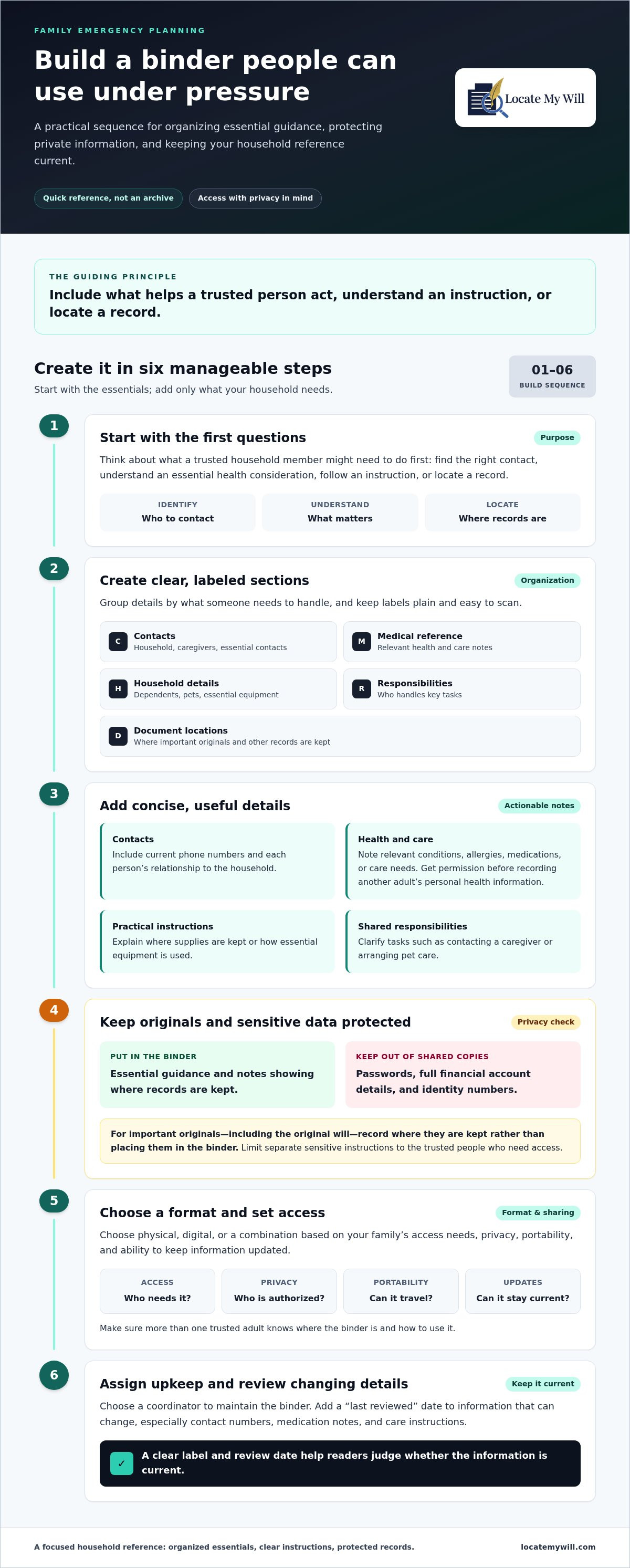
- Use clear sections for contacts, medical references, household details, care instructions, and document locations.
- When creating a family emergency binder, record essential guidance and where original documents are kept rather than gathering every original in one place.
- Choose a physical or digital format based on your family’s access needs, privacy, portability, and ability to keep information updated.
- Include where the original will is kept as one part of your plan, and consider a secure will-location record with authorized searchers.
Why create a family emergency binder before you need one?
An emergency can interrupt familiar routines and make ordinary tasks harder: finding a contact number, explaining a medical need, or locating an important record. A family emergency binder gives household members one organized reference for essential information and instructions. Preparing it in advance reduces last-minute searching and helps people work out what to do next.
A family emergency binder is a quick-reference guide to essential household contacts, health notes, instructions, and document locations, not a general file for storing every record. That distinction keeps it focused on orientation and action. It also supports broader preparedness, or planning ahead for potential disruptions. The binder is a planning aid, not a substitute for emergency services, medical care, or professional advice.
Which households benefit from an emergency binder?
Nearly any household can benefit, especially when care or responsibilities are shared. A family with children might document pickup arrangements and caregiver contacts. A household supporting an older relative may need a concise reference to relevant health notes and care instructions. Pet owners can include feeding or medication guidance, while roommates or co-parents can clarify who handles specific tasks.
Keep the binder proportional to your household’s needs. It doesn’t have to be comprehensive on day one. Assign a coordinator to maintain it, and make sure more than one trusted adult knows where it is and how to use it. A plan that only one person understands may be difficult to use when that person isn’t available.
What should the binder help someone do?
Think of the binder as a guide for getting oriented, not an archive. Someone unfamiliar with the household should be able to find the right contact, understand essential health considerations, follow basic household or care instructions, and learn where key records are kept. Clear labels and plain language make the information easier to use when time or attention is limited.
- Identify: Find essential family, caregiver, and other relevant contacts.
- Understand: Review important health notes and practical household or care instructions.
- Locate: See where original documents and other records are stored, without gathering them all in the binder.
Creating a family emergency binder is most useful when you begin with the questions a trusted household member might face first. Which number should they call? What instruction should they know? Where can they find the needed record? Answering those questions gives the binder a clear purpose and keeps its contents manageable.
What to Include and Protect in an Emergency Binder
Build the binder around tasks someone may need to handle, not around the documents you happen to own. The American Red Cross’ family emergency plan guidance can help you think through household needs. Use the binder to make the most relevant information easy to find, while protecting private records appropriately.
Emergency contacts, health notes, and household instructions
Group information by purpose and label each section plainly. Include details only when they will help a trusted person act or make a decision:
- Contacts: List household members, caregivers, and other essential contacts, with current phone numbers and each person’s relationship to the household.
- Medical reference: Note relevant conditions, allergies, medications, or care needs. Get permission before recording another adult’s personal health information, and keep the details concise.
- Household details: Record practical instructions for dependents, pets, or essential equipment, such as where supplies are kept or how equipment is used.
- Responsibilities: Clarify who handles key tasks, such as contacting a caregiver or arranging pet care, so responsibilities aren’t left to guesswork.
- Document locations: Identify where important originals and other records are kept instead of placing every original in the binder.
Add a “last reviewed” date to sections that can change, especially contact numbers, medication notes, and care instructions. The date helps readers judge whether the information is current.
Important documents, access, and privacy
Essential reference information belongs in the binder; optional records and sensitive data should be included only when there’s a clear need and suitable access control. This is the key distinction between a useful emergency guide and a collection of personal files. In most cases, a location note is enough: for example, state where an original birth certificate or insurance record is kept and who is authorized to access it.
Don’t put passwords, full financial account details, or identity numbers in a copy that several people can access. If someone needs sensitive instructions, keep them separate and limit access to the trusted people who need them. Apply the same approach to will information: record where the original is kept, not the document itself. A secure will-location record can complement the binder; Locate My Will’s will-location service lets users record a will’s physical location and designate authorized searchers.
As you’re creating a family emergency binder, ask of each item: Would a trusted person need this to act, understand an instruction, or locate a record? If not, leave it out or store it separately. A focused binder is easier to use and exposes less sensitive information.
How to create a family emergency binder in manageable steps
A clear process keeps the project focused: decide how people will use the binder, gather relevant information, then organize and share it. Creating a family emergency binder doesn’t require completing every detail at once. A small, usable binder is better than an unfinished archive.
Choose a format and gather information without overloading it
A physical binder is easy to handle and doesn’t depend on a charged device or internet connection, but it can be less convenient to carry and needs secure storage. A digital reference can be portable and easier to update, though access may depend on a device, power, connectivity, and secure sharing. A carefully managed combination can offer flexibility, provided you keep versions consistent and control who can see sensitive details.
Ready.gov’s Family Emergency Communication Plan can help you start household planning. Gather information with the relevant people and include a detail only if it serves a clear purpose. Begin with what someone would need first, then add secondary information as needed.
Arrange pages so another trusted person can use them
Use plain headings, a consistent layout, and a simple contents page. Group information by task or household member, whichever will make it easiest for someone else to find. Keep the cover neutral, without private details that could expose information if the binder is seen by others.
- Step 1: Choose a format. Decide whether a physical binder, digital reference, or combination best fits your household’s access and privacy needs.
- Step 2: Assign a coordinator. Choose who will assemble the information and keep it organized. Make sure another trusted adult knows how to locate and use it.
- Step 3: Gather essentials. Ask relevant household members what information and instructions they want included. Avoid collecting details without a practical reason.
- Step 4: Organize the sections. Add clear labels, a dated contents page, and a short quick-start sheet at the front. State where priority information is located and what the reader should review first.
- Step 5: Share access. Tell authorized household members where the binder or digital reference is kept and how to access it. Share sensitive details separately when appropriate.
Before calling the first version complete, ask someone who didn’t assemble it to follow the quick-start instructions. If they can find the right section without explanation, the layout is working. Note when the contents page was last reviewed so updates are easy to track.
How to store, share, and keep your family emergency binder current
A binder is useful only if the right person can find it and trust that its information is current. Choose storage and sharing arrangements that balance access with privacy, then make upkeep a simple household habit.
Choose storage and sharing arrangements deliberately
A physical copy can be opened without a device or internet connection, but it needs a known, protected location and may be less portable. A digital version can be easier to carry and update, though access may depend on a charged device, connectivity, and secure account access. Consider what will be available during a disruption, who needs access, and how you’ll prevent outdated copies from circulating.
Store a physical binder in a consistent place authorized household members can reach, without leaving it in public view. For a digital copy, use an access method intended for private information and share it only with people who need it. Tell trusted users where to find the binder or approved copy, and explain how to access it. Avoid distributing sensitive pages more broadly than their purpose requires. If you keep both formats, identify which one is current.
Use a practical review routine
Set a recurring review date your family can maintain, such as a regular household planning day. Review the binder sooner after a change in caregiving roles, health needs, contact details, or document storage locations. For digital versions, update the main copy and replace outdated downloads or printed pages as needed.
During each review, check the essentials:
- Contacts: Confirm that names, roles, and phone numbers are still correct.
- Instructions: Verify that care guidance and household directions remain useful.
- Document locations: Confirm that location notes still point to where records are kept.
- Access arrangements: Make sure authorized users know where to find the latest copy and can access it.
Remove obsolete pages rather than leaving old and new instructions together. Put a clear “last reviewed” date on the contents page or cover, without displaying sensitive details there. That marker helps a reader quickly assess whether the binder may need checking.
As you finish creating a family emergency binder, treat storage and review as part of the plan, not as afterthoughts. For will information, a separate secure location record can tell authorized searchers where the original is kept without placing it in the binder. Create a secure will-location record with Locate My Will as one part of your family’s preparedness arrangements.
Include will-location information as one part of the family emergency plan
A family binder can point trusted people to an original will without holding the document itself. Add a brief location note, such as the name of the person or institution holding it and the general place where it is kept. Include only the context someone needs to identify the correct document. Avoid copying private contents into a binder that may be shared more broadly.
This distinction matters: recording a will’s location is not the same as drafting a will, hosting a digital will, or physically storing the original. The binder remains a household reference. A separate location record gives authorized people another way to find the document if the binder isn’t available. As you’re creating a family emergency binder, treat this as one focused entry in a broader preparedness plan, not as a replacement for the original or for professional guidance.
Record where the original will is kept
Make the location note specific enough to be useful, but no more revealing than necessary. If the original is moved, update the binder promptly and review any separate location record so both point to the current place. A stale note can send someone searching in the wrong direction.
For more context, read a guide to finding a will as an executor, or learn about the potential consequences when a will can’t be located. Those topics are useful follow-up reading, but the core binder task is simple: identify where the original is kept and keep that information accurate.
Keep access and notifications intentional
A will-location registry can complement the binder by securely recording where a will is kept. Locate My Will allows users to designate up to three authorized searchers and three notification recipients. Searchers must be verified before they can access the recorded location information. Activation dates control when searches can be performed and notifications sent.
The registry records the will’s location; it doesn’t host a digital will or store the physical original. Keep access limited to the people you intend to authorize, and update the location record if the document moves. This creates a separate, controlled reference while the binder continues to serve the household’s wider emergency-planning needs.
If you want a secure way to record where your original will is kept, consider registering its location with Locate My Will.
Put your family’s plan into action
A useful emergency binder is focused, easy for trusted household members to navigate, and protected from unnecessary access. Start with priority contacts and instructions, make clear where key records are kept, then choose storage and sharing arrangements your family can maintain. Creating a family emergency binder is a practical first step, and regular reviews help keep its information useful as household needs change.
Include a note about where the original will is kept, but leave the document itself in its designated location. Locate My Will securely records where a will is kept. Designated searchers must be verified before accessing the location information, and activation-date controls govern when searches and notifications can occur.
Record where your will is kept with Locate My Will as one part of your wider family preparedness plan. A few clear, well-maintained steps can help your household feel more organized and ready to respond.
Frequently Asked Questions
What should be included in a family emergency binder?
Include the information a trusted household member needs to get oriented: emergency contacts, relevant medical notes, care and household instructions, and locations of important records. Keep the contents specific to your family rather than adding every document you own. A dated contents page helps readers see when information was last reviewed. Avoid placing sensitive original documents or unrestricted account credentials in a copy that multiple people can access.
How do I start creating a family emergency binder?
Start by listing the people, responsibilities, and information your household would need first. Choose a physical, digital, or combined format, and assign someone to coordinate updates. Then organize the essentials under clear headings, such as contacts, care instructions, and document locations. You don’t need to finish everything at once. A useful first version can be brief, with relevant details added as your household reviews it.
Should a family emergency binder be physical or digital?
Either format can work, and some households keep both. A physical binder offers a direct reference that doesn’t depend on a device or internet connection, while a digital version may be easier to update and share selectively. Consider privacy, portability, and who needs access. Also think about whether the information will be available during a power or internet disruption. Choose a setup your trusted household members can use and maintain.
Where should I keep a family emergency binder?
Keep the binder somewhere authorized household members can locate but casual visitors are unlikely to access. Tell trusted users where it is and how to find priority information. If it contains sensitive pages, consider separating them or restricting access to those who need them. For digital copies, use a sharing arrangement that protects private details. The aim is practical access for intended users, not broad visibility.
How often should I update a family emergency binder?
Review it on a schedule your household can reliably follow, and update it whenever important information changes. Check contact details, medical notes, care instructions, document locations, and access arrangements. Mark the review date clearly, then remove outdated pages so old instructions aren’t mistaken for current ones. A short, regular check is easier to maintain than waiting until the binder has grown and nobody knows which details are still accurate.
Should I keep my original will in a family emergency binder?
No. The binder can state where the original will is kept without containing the document. Keep that location note current if the original is moved, and include only the context a trusted person needs to identify it. A separate will-location registry can securely record the physical location for verified, designated searchers. Questions about how a will or copy may be treated depend on the circumstances and applicable law, so seek qualified legal guidance.
How can I protect private information in an emergency binder?
Include information only when it serves a clear purpose, and limit sensitive details in copies shared with multiple people. Avoid placing unrestricted passwords or unnecessary identity and financial information in broadly accessible sections. Share sensitive pages only with authorized people who need them, and review access arrangements when household needs change. A focused binder can remain useful without becoming an open collection of private records.


