

A safe deposit box can protect a will, but it may also make the document harder to retrieve when it matters most. Putting a will in a safe deposit box is an option, yet access after the owner’s death may depend on state rules and could require a court process. Being named personal representative in the will does not necessarily provide automatic access.
A secure location may seem like the responsible choice, and protecting the original document is important. The practical question is whether the people who need the will can locate it and gain access without avoidable delays.
This article explains why access can be difficult, what may happen if loved ones do not know where the will is, and how to prepare your personal representative. You will also learn how to record the will’s location and manage who can search for it, making storage part of a clear plan.
Key Takeaways
- A safe deposit box may protect your will, but access after death or incapacity can depend on state procedures and may take time.
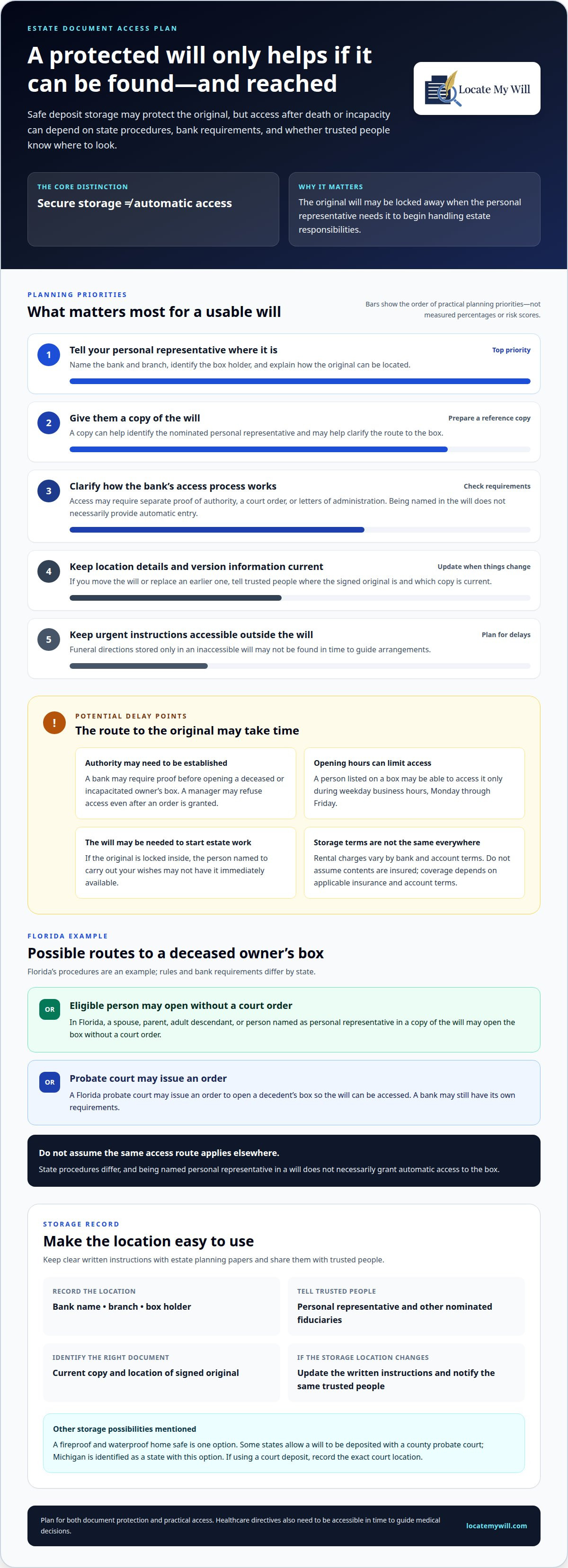
- Tell your nominated personal representative where the will is stored; being named in it may not automatically grant access to the box.
- Give your personal representative a copy of the will and clear information about the box to help them act when needed.
- Consider how delays could affect time-sensitive wishes, and make the storage location part of your estate plan.
Why Can’t I Put My Will In My Safe Deposit Box?
Putting a will in a safe deposit box is permitted in Florida, but secure storage can create an access problem after death or incapacity. The key question is whether another person can lawfully reach the box and retrieve the document.
Access After Death or Incapacity
After death or incapacity, another person may need legal authority before the bank opens the owner’s box. If you are the only person named on the account, relatives may not be able to enter it when you cannot act. After death, the will itself may be locked inside, leaving the person named to carry out your wishes without immediate access.
Who can access a safe deposit box after the owner dies? It depends on state procedures and the bank’s requirements. In Florida, a spouse, parent, adult descendant, or person named as personal representative in a copy of the will may open the box without a court order.
Bank Delays or Refusal
A bank delay can occur when staff require proof of authority before permitting access to a deceased or incapacitated owner’s box. A bank may require a court order or letters of administration, and a manager may refuse access even after an order is granted. This can delay locating the will while the family handles urgent estate matters.
Safe deposit box rental charges vary by bank and account terms. Do not assume the contents are insured; coverage depends on the applicable insurance and account terms.
Executor Authority to Access the Box
Being named executor in a will does not necessarily provide automatic legal access to the owner’s safe deposit box. The bank may require separate proof, such as a court order or letters of administration, before allowing entry. This distinction matters because the executor may need the original will to begin handling estate responsibilities.
Florida provides another route: a probate court may issue an order to open a decedent’s box so the will can be accessed. State procedures differ, so the authority available in one state shouldn’t be assumed to apply elsewhere.
Retrieving a Will for Heirs or an Executor
Heirs or an executor generally need to establish their authority under the relevant state process and the bank’s access requirements. In Florida, eligible relatives or the person named as personal representative in a copy of the will may open the box without a court order; otherwise, a probate court may issue an order.
Before relying on the box, arrange access with the bank and tell your personal representative where the will is stored. Give that person a copy of the will, too. These steps can help identify the document and clarify how to retrieve it.
Risk of loved ones not knowing where a will is stored
A will can remain undiscovered if no one knows where you keep it. A safe deposit box may protect the document, but its contents cannot guide your personal representative if they do not know which bank or branch holds it. The same problem can arise with a home safe, filing cabinet, or another private location.
Tell your nominated fiduciaries where your estate documents are stored. This may include your executor, power of attorney, and healthcare proxy. Give each person clear location details, such as the bank’s name, branch, and name of the box holder. If you change storage locations, update the instructions and notify the same trusted people.
Make the information easy to use. Keep a written record of the location with your estate planning papers, and give your personal representative a copy of the will. Explain how to identify the current version, too. For example, if you replace an earlier will, tell them which copy is current and where the signed original is kept.
Choose storage with both protection and practical access in mind. A fireproof and waterproof home safe is one option for estate documents. A safe deposit box is another, but family members may need to know its location and how to access it. Healthcare directives also need to be accessible in time to guide medical decisions when you cannot communicate your wishes.
Some states allow a will to be deposited with a county probate court. Michigan courts identify Michigan as a state with this option. Where available, this arrangement may give the right people a clear place to look. Rules and procedures vary by state, so include the exact court location in your records if you use this option.
If no will is found, loved ones may not know your chosen personal representative or how you intended your estate to be handled. In Florida, a will discovered only after an estate has been administered under intestate succession rules may be ignored. Keep your location details current, and consider recording where your will is stored so trusted agents have a clear starting point.
Delays in retrieving a will
A delay can leave a personal representative without the document that records your estate wishes. If a bank requires a court process before releasing a safe deposit box, the will may remain inaccessible while that process takes place. Timing depends on the access route and required documentation, so a locked original can complicate the first steps after a death.
Time-sensitive instructions are especially vulnerable. Funeral directions included only in a will may not be discovered until after burial if the document is inaccessible. For example, relatives arranging a funeral might not know your preferences while making decisions. A will is therefore a poor place for instructions that must be available immediately.
Bank access can also depend on opening hours. A person listed on a box may be able to access its contents only during weekday business hours, Monday through Friday. An emergency outside those hours can make retrieval impractical, even if the listed person is available and knows where the box is held.
Plan for the gap between knowing a will exists and having it in hand. Keep a copy with your personal representative and make sure they know where the original is. A copy can identify your nominated representative and help explain why the original matters, while location details give them a starting point for seeking access.
Keep urgent instructions separate from documents that can wait. Tell trusted people where to find funeral preferences and healthcare directives instead of relying on a will locked away at a bank. Review your arrangements after a major life change, such as marriage, divorce, or a child’s birth. This helps keep document locations and instructions aligned with your current wishes.
Informing the personal representative about the safe deposit box
Give your personal representative a copy of your will and clear information about the original’s location. A copy helps them identify your chosen representative and understand which document they need to retrieve. Share these details while you can explain them, rather than leaving loved ones to search banks and household files later.
Write down the bank’s name, branch location, and the name under which the box is held. Add account records or instructions that could help your representative identify the box. For example, if you use one branch but bank elsewhere, include the branch address, not just the bank’s name. Keep this record with your estate planning information.
- Give your personal representative a copy of the will.
- Record the bank and branch where the original is stored.
- Note the box holder’s name and related account information.
- Explain where you keep the written location record.
Tell other trusted agents where relevant documents are stored, too. Your power of attorney and healthcare proxy may need to find financial or medical records while you are alive. For example, a healthcare directive locked away at a bank may be difficult to reach during a medical emergency. Make its location and access information available to the person expected to act.
Review the record whenever you move the will or change who is responsible for your affairs. After replacing a will, tell your representative which version is current and where the signed original is now kept. A simple dated note can prevent confusion between an older copy and the document you intend them to use.
Make the location record part of your regular estate-plan review, alongside changes such as marriage, divorce, or a child’s birth. To keep the location information organized for your representative, record where your will is stored.
Locate My Will: Will Owner Registration Subscription
Locate My Will offers a Will Owner Registration Subscription for recording where your will is kept. The platform records the location, not the physical document, so the original remains wherever you choose to store it. This helps address a practical gap: your personal representative needs to know where to look and how a search can be activated.
You can designate up to three authorized searchers and three notification recipients. Search Activation Date Control lets you set when searches can be performed and notifications sent. Use these tools to organize location details and identify the people who may act when needed.
If you want a structured way to record your will’s location and manage searchers, visit Locate My Will.
Make Your Will’s Location Part of Your Plan
Estate planning is not finished when you sign a will. The people expected to act need a reliable way to locate the right document, even after your arrangements change. If you are putting a will in a safe deposit box, make the location record part of your plan, not an afterthought.
Set a reminder to review your arrangements when you update your will, move, or change your personal representative. Confirm that the person you have chosen still knows where to find the current document and understands the next step. A brief review can keep your instructions aligned with the people and circumstances that matter now.
For a structured way to record your will’s location and manage who can search for it, contact Locate My Will. A clear record today can make it easier for your representative to begin their work when the time comes.
Frequently Asked Questions
Can you store an original will in a safe deposit box in the United States?
Whether you can store an original will in a safe deposit box depends on the state. Florida permits this, but storing the will and accessing it later are separate issues. Before choosing a box, consider whether the person handling your estate can locate the bank and establish access under the applicable state process. A secure location is useful only if the will can be retrieved.
What laws govern access to a safe deposit box containing a will by state?
State rules and procedures govern access, so one state’s process does not establish another’s. In Florida, a probate court may issue an order to open a deceased person’s box. Florida also allows specified relatives or a person named as personal representative in a copy of the will to open it without an order. Michigan courts identify Michigan as a state where a will may be deposited with the county probate court.
Does a bank allow a named executor to access a safe deposit box before probate?
Being named executor does not automatically provide access in every state. In Florida, a person named as personal representative in a copy of the will may open the deceased owner’s box without a court order. Banks may also require legal proof, such as an order or letters of administration. The will’s wording alone does not settle the bank’s access decision.
What are the risks of keeping your only original will in a safe deposit box?
The main risk is that the original may be unavailable when someone needs to identify your instructions. For example, your representative might know a will exists but lack the details needed to locate the right bank branch. If the document remains undiscovered, its directions cannot guide estate decisions. Keep a separate record of its location and tell the person you nominated.
Where should you store an original will instead of a safe deposit box?
A fireproof and waterproof home safe is one alternative for keeping an original will at home. Choose a location your personal representative can identify, then record how to reach the document. Some states also allow wills to be deposited with a county probate court; Michigan courts identify Michigan as one such state. Available options depend on state procedures.
Should you give your executor a copy or the location of your will?
Give your executor both a copy and the location of the original. A copy helps them recognize your document and understand whom you nominated, while the location points them toward the signed original. Clearly mark the copy and update the information if you replace or move the will. Confirm that your executor received the details and can find them.


